WORLD LIBERTy FINANCIAL
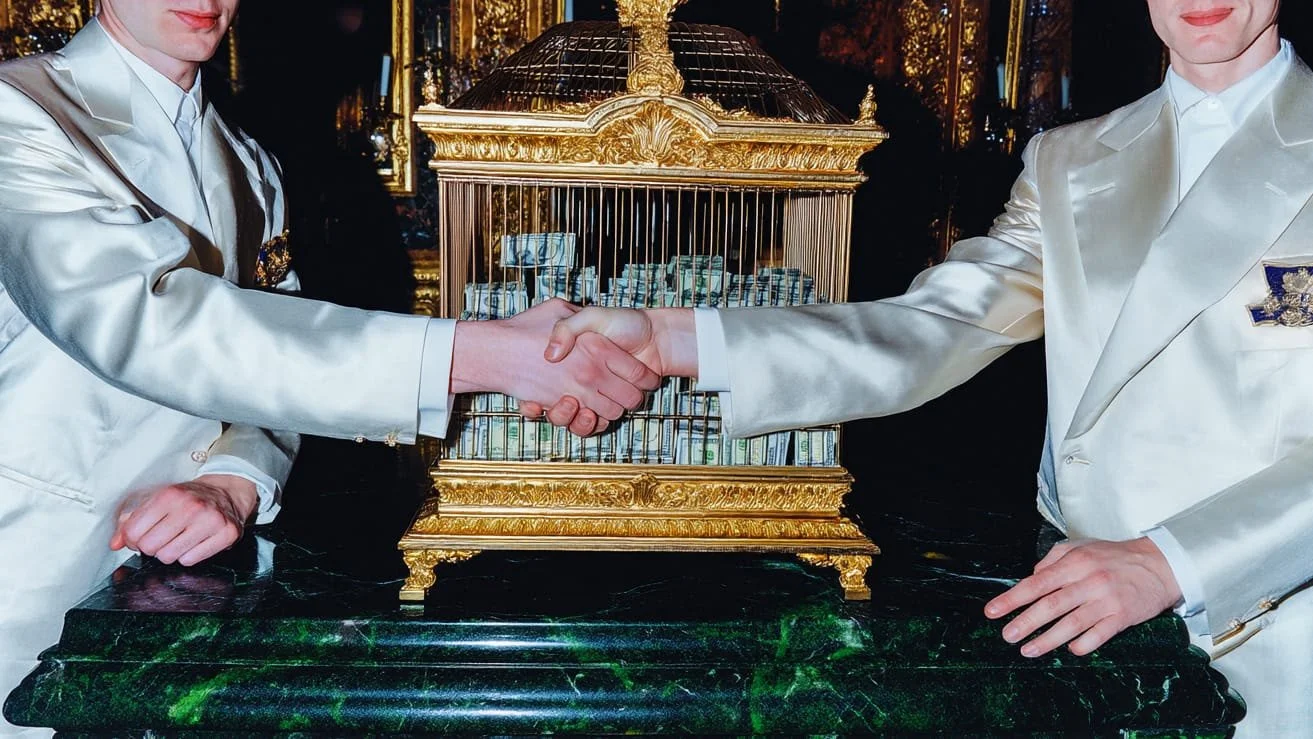
IN GOVERNANCE, WE ASK : WHO GOVERNS
TRUMP CRyptO
In September 2024, the Trump family announced they were getting into crypto. The project was called World Liberty Financial (WLFI), and it was going to bridge traditional finance with blockchain-based lending, borrowing, and payments. Bold stuff.
The co-founders included Zachary Folkman and Chase Herro — previously known for selling pickup artist advice and running Dough Finance, a protocol that suffered an exploit before WLFI launched — alongside Zach and Alex Witkoff, sons of Trump associate Steven Witkoff. Donald Trump was listed as "Chief Crypto Advocate." Eric and Don Jr. were "Web3 Ambassadors." Barron Trump, then 18, was christened "DeFi Visionary."
Sure.
Operational control rested with the non-family co-founders. A Trump-affiliated entity, DT Marks DEFI LLC, reportedly held somewhere between 38 and 75 percent equity — the number has shifted depending on which document you're reading — and entitlement to 75 percent of net proceeds from token sales, plus a share of stablecoin profits. The exact economics have never been released directly by the team. So much for blockchain transparency.
FIRE → FIZZLE
The WLFI governance token launched in October 2024. Total supply: 100 billion tokens. Starting price: $0.015. Restricted to accredited or foreign investors, and non-transferable at launch.
Early sales were dismal. By late October, they had raised roughly $2.7 million. Then Trump won the election, and the numbers started moving. Tron founder Justin Sun committed tens of millions, which triggered a wave of interest. By March 2025, the project reported raising $550–590 million total, representing about 25 percent of token supply sold.
The token became transferable in September 2025 following a governance vote — one that the project team almost certainly controlled through their own allocation. It promptly ran up to $0.40–$0.50, then began falling. As of April 2026, it trades around $0.078–$0.08.
This is where things get uncomfortable for the project. Let's ask a simple question: have they done anything new?
No.
USD 1
USD1, their stablecoin, is a U.S. dollar-pegged instrument with no distinguishing features. USDT, USDC, PYUSD, GUSD, and others got here first, with better banking connections and deeper integrations. Meanwhile, Western Union, Fidelity, and PayPal have all launched stablecoins. A top-20 U.S. bank is reportedly close. USD1 just... exists. The only notable feature is the Trump brand — which, at this point, has been quietly scrubbed from the website and project documents anyway.
WLM
Beyond the stablecoin: they launched World Liberty Markets, a borrow/lend platform built on the Dolomite protocol, in January 2026. Borrow/lend is a crowded, struggling category. They have announced plans for an app, a crypto wallet, and agentic payments — all things that have been done before, multiple times, by better-resourced teams. Brave had an integrated wallet years ago.
The technical work, frankly, has the fingerprints of outside teams having quietly provided support. That's speculation based on industry experience, not confirmed fact. But the output of an under-resourced team copying the activities of others is a reasonable way to describe what's been shipped.
SUN $
Justin Sun. Sun committed somewhere between $30 and $75 million as an early investor — primarily, by his own later admission, to gain access to the Trump family. After the token became tradable, relations fell apart. Sun publicly accused the project of freezing his holdings, secretly inserting blacklisting functions into the smart contracts, stripping his governance voting rights, and threatening to permanently destroy his tokens. In April 2026, he filed a federal lawsuit in California alleging fraud, extortion, and an illegal scheme to seize his property in retaliation for refusing to put in more money. WLFI called the claims meritless. Sun pressed forward anyway.
CZ $
The CZ Pardon. In October 2025, President Trump issued a full pardon to Changpeng Zhao, founder of Binance, who had previously pleaded guilty to federal money laundering violations. Binance had assisted with the technical elements of USD1.
MGX $
A UAE state-backed firm, MGX, used USD1 for a $2 billion investment into Binance around the same period. Binance reportedly held substantial USD1 reserves, which would generate fees flowing back to World Liberty Financial — and indirectly to the Trump family entity. Trump publicly stated he didn't know who CZ was while signing the pardon. WLFI denied involvement in the pardon process and called the project apolitical. Nobody directly denied that the Trump family was profiting from the arrangement.
DOLOMITE
The Dolomite Borrow. In early April 2026, the WLFI treasury deposited approximately 5 billion WLFI tokens as collateral on the Dolomite lending protocol — a protocol co-founded by WLFI's own CTO, Corey Caplan — and borrowed roughly $75 million in stablecoins, primarily their own USD1 plus USDC. A portion of those funds moved to Coinbase Prime. The move pushed USD1 pool utilization near 100 percent, temporarily preventing some depositors from withdrawing.
Over half of Dolomite's total value locked became concentrated in WLFI. The token price fell to an all-time low. WLFI called it a strategic yield-generating position. Outside observers called it circular financing. The unanswered question — why those tokens moved to Coinbase at all, and whether they were used in trades connected to anyone with advance knowledge of Trump announcements — remains unanswered.
DOLO-LOCKED
The lockup situation deserves its own sentence: approximately 80 percent of early investor allocations and large founder and team holdings were indefinitely locked. In mid-April 2026, the project proposed a restructuring: a two-year cliff plus multi-year linear vesting, with a 10 percent burn of founder allocations. Critics noted this pushes full unlocks past 2030 and questioned who benefits from the delay. The governance vote was controlled, as it has been before, by the team.
Regulatory action is unlikely in the near term. The political insulation provided by the President's family makes SEC enforcement a remote prospect until at least after 2028. Private litigation — Sun's lawsuit, plus whatever follows — is probably where the real pressure comes from.
The community has rendered its verdict through price action. The token is in free fall, and the crypto world, which has seen enough of these stories to recognize the shape of one, has moved from ambivalence to open condemnation.
WTF?
Is there a smoking gun? Not yet. Is there a lot of smoke, alongside patterns that have historically preceded bad endings? Yes.
World Liberty Financial isn't reinventing finance.
What it appears to be doing is setting itself up as the next main character in a crypto drama.
For those who don't know the industry, that is never where you want to be.